
Loading...
Serving Pueblo, CO and surrounding areas. (719) 750-0080
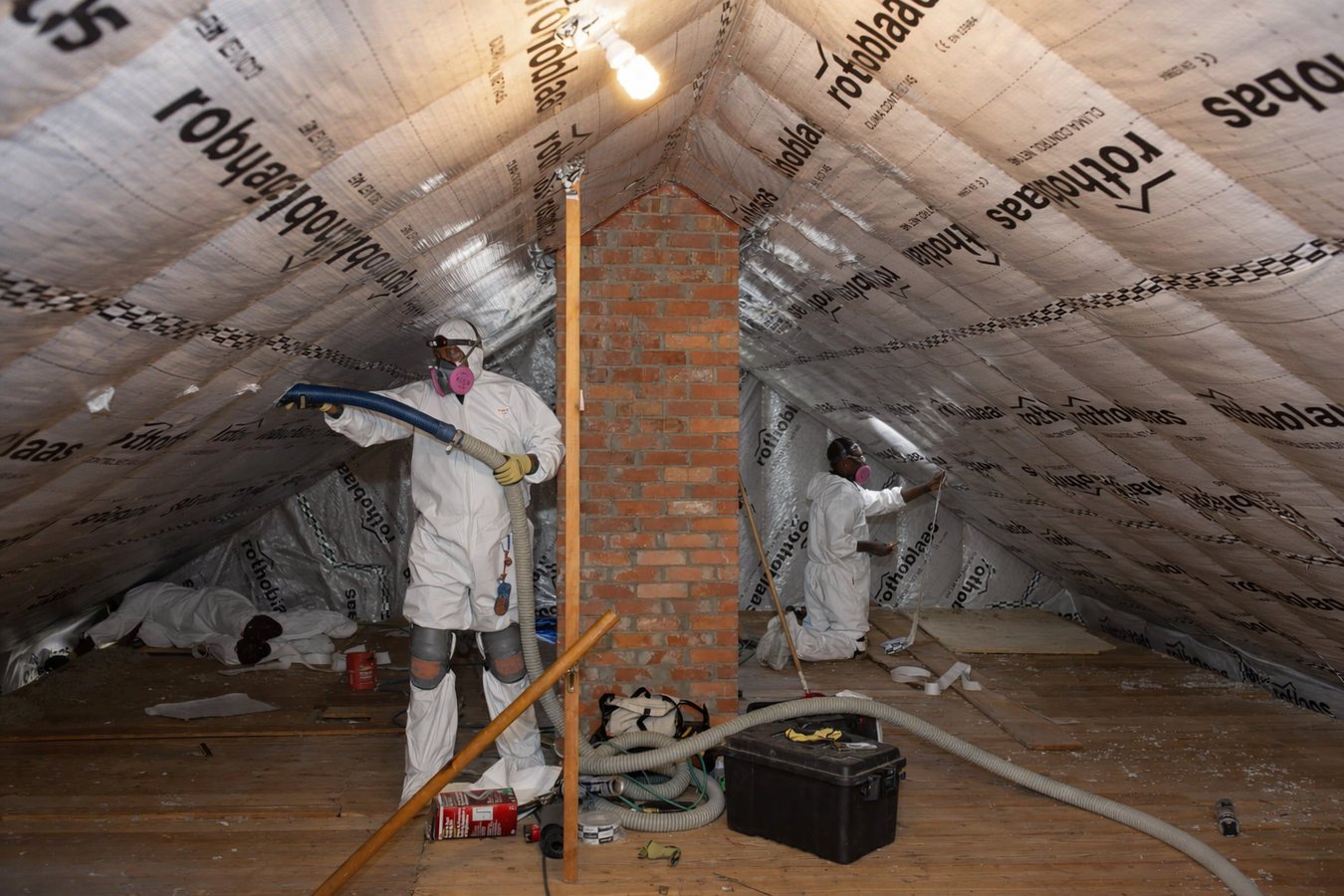
Your insulation cannot do its job if air is moving through gaps in the attic floor. We find and seal every one of them so your heating and cooling dollars stay inside your home.
Attic air sealing in Pueblo, CO means locating and permanently closing the gaps in your attic floor where conditioned air escapes into the attic above - most jobs are completed in four to eight hours and your home is usable immediately afterward. The gaps are not dramatic holes you could see from your living room; they are the small openings around electrical wires, plumbing stacks, recessed lights, and wall tops that add up to a significant source of heat and cooling loss every single day.
Attic air sealing is not the same as adding insulation, and it is not a substitute for it either. The two jobs address different problems. Insulation slows heat moving through a material; air sealing stops air from bypassing the insulation through gaps. Homes in Pueblo that have had insulation added without air sealing often still have high bills because the air bypasses still exist. If you are also looking at whole-home air sealing services, we can assess both the attic and the rest of your home's envelope in a single visit.
The U.S. Department of Energy estimates that sealing air leaks and adding insulation together can cut heating and cooling costs meaningfully. In Pueblo, where both summer heat and winter cold push your system hard, that saving adds up quickly over a year.
If your gas or electric bill climbs sharply when Pueblo's cold snaps hit and you have not changed your habits, conditioned air is escaping through the attic. Pueblo winters can bring extended cold stretches where your system runs almost continuously, and a leaky attic floor makes that worse.
Pueblo is one of the windier cities in Colorado, and when the wind picks up, homes with attic air leaks often feel noticeably draftier even with all the windows closed. If one room always runs colder than the rest of the house, or if you feel a faint chill near ceiling fixtures or interior walls, air is moving through gaps above you.
In Pueblo's high-desert environment, wind carries fine dust and particulates constantly. When your attic has gaps, that outside air is pulled into your living space through pressure differences. If dusting feels like a losing battle, the attic floor is often part of the reason.
Ice dams, the ridges that build up at the edge of a roof after snowfall, are caused by warm air escaping through the attic and melting snow unevenly. If you noticed ice building at your roofline after last winter's snowstorms, that is a direct sign that heat is escaping through the attic in a way that needs to be addressed.
The core of every attic air sealing job is a systematic search of the attic floor. Our crew enters the attic and works across every square foot, sealing openings around electrical wires, plumbing pipes, HVAC chases, recessed light housings, and the tops of interior walls. These locations account for most of the air movement in a typical Pueblo home, and they are invisible from below. Foam and caulk are applied to close each gap permanently, and the sealed areas do not need to be revisited.
For homes where insulation is being added or replaced at the same time, we complete the air sealing before any new insulation goes down. This sequencing matters: insulation placed over unsealed gaps is much less effective than insulation placed over a properly sealed floor. Many homeowners schedule attic air sealing alongside crawl space vapor barrier installation to address both ends of the home's thermal envelope in a single visit.
When a diagnostic test is included, we run a blower door measurement before and after the work. This gives you a real number showing exactly how much the air leakage rate improved. Not every project requires a full diagnostic, but for homeowners who want documented evidence of the improvement, it is the most transparent option available.
Suits any Pueblo home where the attic is accessible; crew seals all penetrations systematically across the entire attic floor.
Best when new insulation is being added at the same time; air sealing is completed first so insulation covers a properly sealed surface.
Before-and-after measurement of your home's air leakage rate, giving you documented proof of the improvement achieved.
Addresses both the attic floor and the crawl space in a single project for homeowners who want to seal the full thermal envelope at once.
Pueblo's climate puts your home under thermal pressure from both ends. Summer temperatures regularly top 95°F, and winter nights can drop below zero - a swing of more than 100 degrees across the year. When your attic floor has gaps, that extreme air pushes straight into your living space in both directions: cold air drops in during winter, and hot attic air forces down in summer. Homeowners in Pueblo feel the impact of a leaky attic more acutely than people in milder climates, which is why the payoff from sealing it is also larger here.
The housing stock makes the problem especially common. Much of Pueblo's residential inventory was built between the 1900s and 1960s, particularly in neighborhoods like the Eastside, Bessemer, and the area around the Historic Arkansas Riverwalk. Homes of that era were built before modern energy codes existed, and their attics often have dozens of unsealed gaps around old plumbing stacks, knob-and-tube wiring chases, and original light fixtures. If your home was built before 1980, the attic floor has almost certainly never been properly sealed.
We work on homes throughout the region, including Pueblo, Fountain, and Trinidad. Whatever the age or style of your home, the attic is one of the most cost-effective places to start when you want to reduce energy costs and improve year-round comfort.
We respond within 1 business day. We ask about your home's age, whether you have had any insulation work done, and what is prompting you to call. This helps us arrive at the assessment with the right tools and materials.
A technician spends time in the attic identifying where the gaps and openings are. This visit usually takes one to two hours, and you receive a written estimate at the end explaining what we found and what we recommend. No obligation to proceed.
The crew enters the attic and works systematically across every penetration, applying foam and caulk to seal each gap. The work takes four to eight hours depending on attic size. You can stay home; the crew stays in the attic the entire time.
When the work is done, the crew walks you through what was found and sealed. If a blower door test was included, you receive your before-and-after numbers at this stage. There is no curing period, and your home is fully usable immediately.
Free estimate. No obligation. We respond within 1 business day and explain exactly what we found before any work starts.
(719) 750-0080We offer blower door testing before and after the work so you receive a real, measured result. Most contractors skip this step. We offer it because it is the only way to know with certainty that the job improved your home's air tightness, not just the contractor's word.
Older Pueblo homes have framing quirks, older penetration types, and construction methods that require different sealing approaches than newer builds. We have worked on homes across Pueblo's historic neighborhoods and know what to look for in houses built before modern energy codes existed.
Our service area covers Pueblo and the surrounding region, which means we have real experience with the local climate, building stock, and utility rebate programs. We are not a Denver crew sending a van south for one job.
Black Hills Energy and other local utilities have offered rebates for qualifying efficiency work. We document our jobs in a way that supports rebate applications and can point you to the right programs before work starts, so you do not miss out on available savings.
Attic air sealing is one of the highest-return home improvements available for a Pueblo homeowner, and it is not complicated work when it is done by someone who knows what they are looking for. You can learn more about what qualifies as thorough air sealing from the Building Performance Institute, an independent credentialing body that sets the standard for home energy work. Ask your contractor whether their approach aligns with BPI guidelines before you schedule the job.
Seal the crawl space floor and walls to stop ground moisture and cold air from entering your home through the foundation - a natural complement to attic work.
Learn moreExtend the air-sealing work beyond the attic to the rest of your home's envelope, closing leaks around windows, doors, and penetrations throughout every level.
Learn moreEvery week of delay means more conditioned air escaping through gaps that could be sealed in a single day. Call us now or request a free estimate online.