
Loading...
Serving Pueblo, CO and surrounding areas. (719) 750-0080
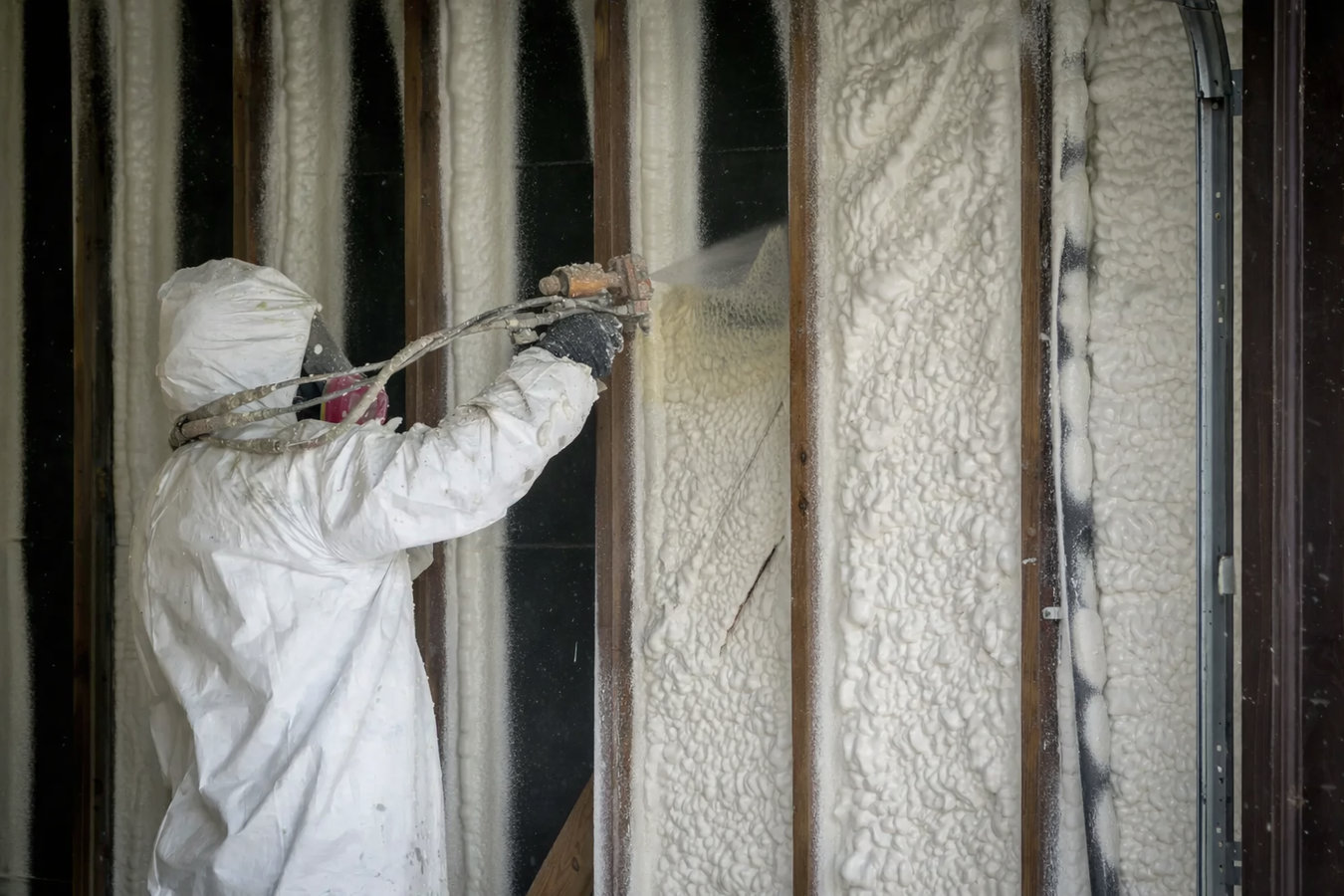
Pueblo winters push cold air through every gap in an older home. Spray foam seals those gaps completely and holds your conditioned air inside, season after season.
Spray foam insulation in Pueblo, CO seals air leaks and creates a thermal barrier in one application - most residential jobs covering an attic or crawl space are completed in a single day. Unlike fiberglass batts, it expands into every gap and hardens in place, which means drafts stop where they start.
Many Pueblo homeowners call us after years of high utility bills and rooms that never quite reach a comfortable temperature. The cause is almost always the same: air moving through gaps the insulation cannot reach. Spray foam addresses that problem at the source.
If your home has older fiberglass that has settled or compressed, you may want to consider attic insulation as a complement - or as a first step before spray foam work in the walls and rim joists.
If your gas or electric bill climbs sharply from October through February without any habit change, heat is escaping through gaps. Pueblo winters are long, and a poorly sealed home runs your furnace overtime trying to keep up.
Hold your hand near an exterior-wall outlet on a cold, windy Pueblo day. If you feel cool air moving, you have air leaks. Spray foam fills the cavities behind outlets and along baseboards where other materials cannot reach.
One bedroom always cold in winter? One corner that never cools in summer? In Pueblo's older neighborhoods, this is common in rooms above uninsulated crawl spaces or next to exterior walls that were never properly insulated.
Homes in Pueblo's Bessemer, Eastside, or Grove neighborhoods were often built with little or no wall insulation. If you have no record of insulation work, there is a strong chance the building envelope has significant gaps.
We install both open-cell and closed-cell spray foam depending on where the material is going and what the space needs. Open-cell foam is softer and more flexible, making it well suited for interior attic decks and wall cavities where moisture is not a primary concern. Closed-cell foam is denser, rigid, and acts as a moisture barrier - the right choice for crawl spaces, basements, and any exterior wall facing Pueblo's climate extremes.
For homeowners comparing foam types in detail, our closed-cell foam insulation page covers when the denser option makes sense. Both types share the same fundamental advantage: they seal and insulate in one step, eliminating the separate air-sealing process required with batts or blown-in material.
Most residential spray foam jobs in Pueblo cover one or more of these areas: the attic floor or roof deck, crawl space walls and floor, basement rim joists, or exterior wall cavities during a renovation. The scope depends on where your home is losing the most conditioned air.
Suits interior attics and walls where moisture resistance is not the top priority.
Best for crawl spaces, basements, and exterior walls where a moisture barrier matters.
Applied to the underside of the roof deck for a conditioned attic with sealed rafter bays.
Stops cold air from entering through the floor system of your living space.
Pueblo sits at roughly 4,700 feet in a semi-arid high-desert climate where summer temperatures regularly top 95°F and winter nights can drop below zero. That is a swing of nearly 100 degrees, and your insulation has to perform at both extremes. Closed-cell spray foam handles that range better than most materials because it holds its shape and sealing ability regardless of whether it is baking in a July attic or sitting in a frozen crawl space in January.
Pueblo is also one of the windiest cities in Colorado, and wind-driven cold air finds every gap in an older home's exterior. The Bessemer, Eastside, and Grove neighborhoods - where many homes predate 1970 - are particularly common candidates for spray foam work because their framing has had decades to develop gaps around pipes, wires, and settling joints. Spray foam fills those irregular spaces in a way that cut-to-fit fiberglass cannot.
We work regularly in Pueblo, Canon City, and Colorado Springs, and our crews are calibrated for working at altitude - something a contractor based at lower elevations may not account for.
We respond within 1 business day. A brief conversation covers what areas you want insulated, the age of your home, and any comfort problems you have noticed. No pressure, no commitment.
We walk the areas to be insulated, measure what is already there, and check for moisture or structural issues first. This visit is free. You will know exactly what we found and what we recommend before any work is scheduled.
You receive a written breakdown by area and foam type. We explain why we recommend each option and what thickness we plan to apply. Compare it against other estimates - that is fine with us.
Most residential jobs are done in a single day. Plan to be out of the home for 24 hours after application while the foam cures. Before you return, we will walk you through the completed work so you can see every sealed gap yourself.
We respond within 1 business day. There is no obligation to proceed. After you submit, someone from our office will call to schedule a free on-site estimate at a time that works for you.
(719) 750-0080Spray foam chemistry is sensitive to altitude. Our crews work at Pueblo's elevation every day and adjust equipment accordingly - something crews primarily based at lower elevations often do not do, leading to uneven expansion or poor adhesion.
Colorado requires contractors who work on the building envelope to comply with current state energy codes, and we pull permits when the job requires them. Every project is documented so you have a record of what was done.
In our years working in Pueblo, Canon City, and surrounding areas, we have handled everything from 1920s Craftsman bungalows with no original insulation to newer homes with specific air-sealing needs. Local experience matters here.
Phone quotes for spray foam are rarely accurate. We always assess the space in person before giving you a number - because the actual area, accessibility, and existing conditions all affect the final cost. You deserve a real estimate.
The U.S. Department of Energy notes that properly air-sealing and insulating a home can reduce heating and cooling costs by up to 15 percent. In Pueblo's climate, those savings are real and consistent across every heating and cooling season - not a one-time benefit. See DOE guidance on insulation.
Bring aging or compressed attic insulation up to today's standards with blown-in or batt material sized for Pueblo's climate zone.
Learn moreRigid, moisture-resistant closed-cell foam for crawl spaces and exterior walls where a vapor barrier is part of the goal.
Learn morePueblo winters do not wait - contact us now and we will schedule a free on-site estimate within 1 business day.