
Loading...
Serving Pueblo, CO and surrounding areas. (719) 750-0080
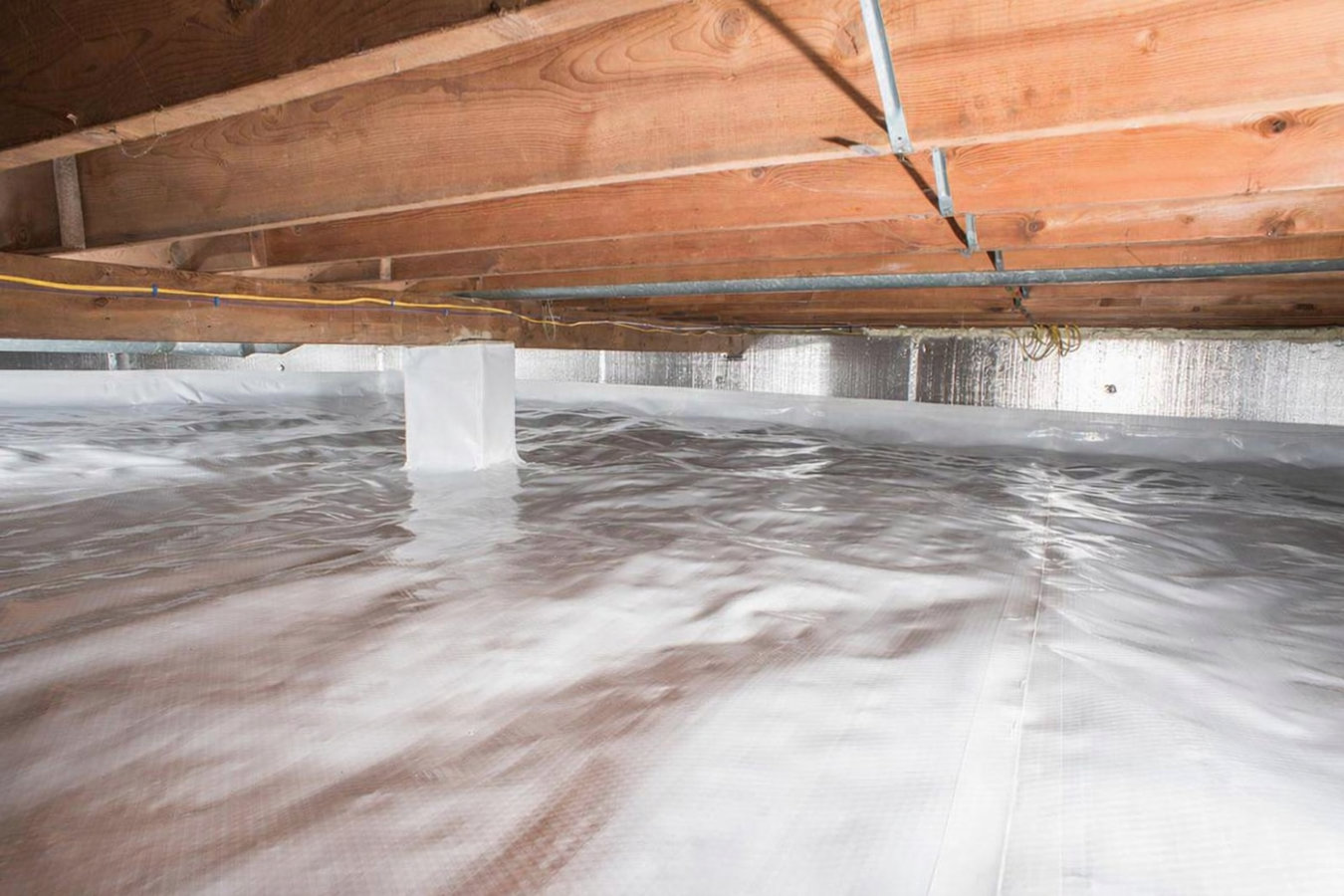
Ground moisture silently works its way into unprotected crawl spaces, softening floor joists and raising humidity in your home. A properly installed vapor barrier cuts that off at the source before the damage adds up.
A crawl space vapor barrier in Pueblo, CO is a heavy-duty plastic sheet installed across the bare dirt floor of your crawl space to block ground moisture from rising into your home - most jobs are completed in one to two days with no disruption to your living areas. The barrier covers the entire floor, overlaps at the seams, and runs up the foundation walls so moisture cannot sneak in around the edges.
Many Pueblo homeowners assume moisture is not a concern here because the outdoor air is dry most of the year. But Pueblo's clay-heavy soils hold water from snowmelt and summer thunderstorms long after the surface looks dry, and that ground moisture rises into unprotected crawl spaces regardless of what the air feels like outside. A significant share of homes in Pueblo's established neighborhoods, including Bessemer and the Eastside, were built before vapor barriers were standard practice and have bare dirt floors with no protection at all. If you are also seeing soft or springy floors, combining a vapor barrier with our crawl space insulation service addresses both moisture and thermal performance in a single visit.
The goal is simple: put a physical layer between the ground and your home's wood framing, then seal it so the moisture cannot find its way around. Done correctly, a quality vapor barrier lasts 20 years or more without needing replacement.
If your home has a faint damp-basement odor, especially in late winter or early spring during Pueblo's snowmelt season, that smell is usually coming from your crawl space. Air from the crawl space drifts upward into your living areas, and when that air carries moisture and mold spores, the smell comes with it. This is one of the earliest signs that ground moisture is getting into your crawl space unchecked.
Walk slowly across your floors and notice any spots that feel spongy underfoot or creak more than they used to. Wood floor joists that have been absorbing ground moisture over time begin to soften and lose rigidity. In Pueblo's older neighborhoods where homes may have never had a vapor barrier, this kind of floor softness signals that the framing underneath has been exposed to ground moisture for years.
If you have peeked into your crawl space and seen water droplets or rust forming on metal pipes or HVAC ducts, that is a direct sign of excess humidity. In Pueblo, this is especially common in late winter and early spring when snowmelt raises soil moisture levels. Condensation on metal surfaces means the crawl space air is humid enough to deposit water on cooler surfaces, the same process that eventually damages wood and encourages mold.
Many homes in Pueblo's established neighborhoods were built when vapor barriers were not required or commonly installed. If you have owned your home for years and no one has ever looked at the crawl space, there is a real possibility it has a bare dirt floor with no moisture protection. Getting a contractor to take a look, before something is wrong, is far less expensive than repairing rotted framing after the fact.
Every vapor barrier job starts with an honest assessment of your crawl space. Before any plastic goes down, we look at the condition of the soil, any existing materials, the height and accessibility of the space, and whether there are drainage or mold issues that need to be addressed first. If there is standing water or active mold, we tell you that before any work begins, because installing over those problems makes them worse, not better.
We use heavy-duty polyethylene sheeting that holds up through Pueblo's wide temperature swings and cold winters without cracking or degrading. Seams are overlapped and taped, and the material runs up the foundation walls with secured edges so moisture cannot sneak in around the perimeter. The quality of the installation, not just the material, is what determines how long the barrier performs. For homes where a vapor barrier is just the first step, we also offer full vapor barrier installation services that can include wall coverage and encapsulation planning. For homes where the floor insulation above the crawl space has also been compromised, pairing the vapor barrier with our crawl space insulation work addresses both moisture control and thermal performance in the same project.
When the installation is complete, we show you the finished work, either in person or with photos, so you can confirm the entire floor is covered and the seams are properly sealed. You should never have to take a contractor's word for work done in a space you cannot easily see yourself.
Homes with bare dirt floors and moderate moisture concerns that need reliable ground moisture protection without full encapsulation.
Crawl spaces that get foot traffic for HVAC or plumbing access, where thicker material is needed to resist tearing over time.
Homeowners with older crawl spaces that have never been inspected or contain old insulation debris that must be removed first.
Homes needing both moisture control at the floor level and thermal insulation to reduce energy loss through the crawl space ceiling.
Pueblo sits at roughly 4,700 feet in a semi-arid climate, and that elevation creates conditions that work against unprotected crawl spaces in ways many homeowners do not expect. The temperature swings between day and night are more pronounced here than at lower elevations, which drives condensation in crawl spaces even during dry months. At the same time, Pueblo's clay-heavy soils retain water from snowmelt and summer thunderstorms for a long time after each event, keeping the ground beneath homes persistently moist long after the outdoor air feels dry. According to the Colorado Geological Survey, the clay soils across much of Pueblo County expand and contract with moisture cycles in ways that keep the soil surface and near-surface layer wet longer than homeowners typically realize.
Pueblo's late winter and early spring snowmelt season, roughly February through April, is the highest-risk window for crawl space moisture. That is when soil moisture levels spike and homeowners in neighborhoods like Bessemer, the Eastside, and the older blocks near central Pueblo are most likely to notice musty smells or soft spots in floors. Scheduling a vapor barrier installation in late fall, before that window opens, is the most protective timing.
Homeowners in surrounding communities including Canon City and Florence face similar clay-soil and snowmelt conditions and benefit from the same approach. We serve those areas and bring the same materials and installation standards to every job in the region.
We will ask you a few basic questions about your home, your crawl space access point, and any problems you have noticed. There is no cost to call, and we respond to all estimate requests within one business day.
We access your crawl space through the hatch, typically in a closet floor or on the exterior foundation, and check the floor condition, any moisture damage, and whether drainage or debris issues need to be resolved before the barrier goes down. We walk you through what we find before recommending anything.
You receive a clear written price that covers materials, labor, and any prep work identified during the assessment. No surprise charges added after the job starts. You decide whether to move forward at your own pace.
The crew lays the sheeting, overlaps and seals the seams, and runs the material up the foundation walls. Before leaving, we show you photos of the finished installation so you can see for yourself that every part of the floor is covered and the edges are secured.
Free estimate, no obligation. We respond within one business day.
(719) 750-0080We use a minimum of 10-mil polyethylene sheeting on every crawl space job, rated to resist cracking through Pueblo's below-zero cold snaps and wide day-to-night temperature swings at 4,700 feet. Thinner budget material becomes brittle in our climate and fails before the job pays for itself.
Every seam is overlapped by at least 12 inches and taped, and every edge is run up the foundation wall and secured. This is the step that separates a barrier that works from one that still lets moisture through at the joints. We do not lay sheets loosely and call it done.
We have installed vapor barriers in homes across Pueblo's older neighborhoods, including Bessemer, the Eastside, and properties near Fountain Creek, where clay-soil moisture retention and seasonal snowmelt make crawl space protection a genuine need rather than an upsell. Local experience with local soil conditions matters.
Every completed installation includes photo documentation so you can see the finished work without crawling into the space yourself. This also gives you a record if you ever need to reference it for insurance, home sale disclosures, or future maintenance work.
The Insulation Contractors Association of America sets the installation standards we follow for vapor barrier work, including material overlap and seam sealing requirements. Every job we do in Pueblo meets those standards, and we back it with our workmanship. If you have a problem with the installation, call us.
Full vapor barrier installation covering walls and floors for homes that need more than a basic crawl space barrier.
Learn moreInsulation installed between floor joists above your crawl space to reduce heat loss and improve comfort on upper floors.
Learn morePueblo's snowmelt season is coming. Protect your floors and framing before ground moisture has another winter to do its damage. Contact us now for a free estimate.