Loading...
Serving Pueblo, CO and surrounding areas. (719) 750-0080
Cold floors above your basement and heating bills that climb every winter are signs your foundation is losing heat. We assess moisture first, then install the right insulation so your basement holds heat and your furnace runs less.
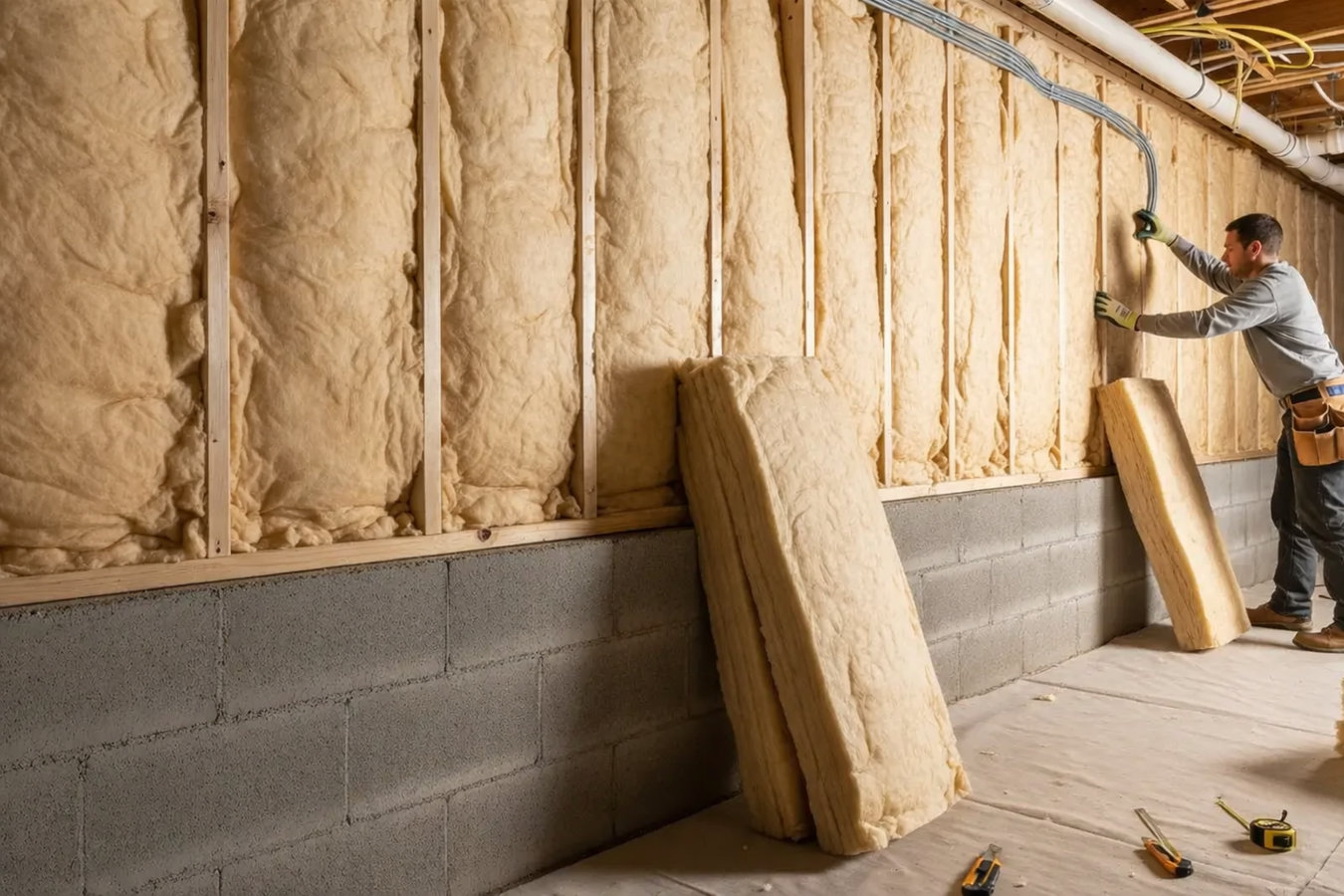
Basement insulation in Pueblo, CO creates a thermal barrier along your foundation walls and rim joist that slows heat from escaping into the ground and outside air - most jobs on an unfinished basement are completed in one to two days. The rim joist, the band of framing just above your foundation where the floor system sits, is the single leakiest area in most older Pueblo homes and is where insulation delivers the fastest return.
If your home was built before 1980 in one of Pueblo's established neighborhoods, there is a good chance your basement walls have little to no insulation. Most of those homes were built to standards of their era, when basement insulation was simply not part of standard practice. The result is a home where the furnace works harder than it should every winter and the floors above the basement feel cold even when the heat is running. If you are dealing with both problems, combining basement insulation with crawl space insulation in the same project addresses your home's below-grade thermal envelope in a single visit.
The right insulation material for your basement depends on whether moisture is present, whether the space is finished, and what R-value target is appropriate for your heating budget. We assess all of that before recommending anything.
If your Black Hills Energy gas bill climbs sharply from October through March without any change in habits, heat is escaping somewhere. The basement, especially an uninsulated rim joist area, is one of the most common culprits in Pueblo homes built before 1980. Waiting another winter adds another year of excess heating costs.
If you walk across your kitchen or living room in socks and the floor feels noticeably cold, that is often a sign that cold air is rising from an uninsulated basement below. This is especially common in Pueblo's older Craftsman bungalows and Victorian-era homes where the floor framing was never sealed or insulated.
Run your hand along the top of your basement walls where they meet the floor framing above. If you feel cold air moving, that rim joist area is uninsulated and letting outside air pour in. This is one of the most common and fixable sources of heat loss in Pueblo homes built before the 1980s.
A musty smell or water droplets forming on your basement walls signal a moisture issue that must be addressed before any insulation goes in. In Pueblo, homes near the Arkansas River corridor or in neighborhoods with clay-heavy soil are more prone to this. Ignoring it and insulating over a moisture problem makes remediation far more expensive later.
Every basement insulation project starts with a moisture and condition assessment. Basements are the most moisture-prone part of a home, and the wrong material installed in the wrong conditions can trap moisture against your walls and create a mold problem. We look at your walls, rim joist, existing insulation, and any signs of water intrusion before recommending a material or a scope of work. If moisture remediation is needed first, we tell you that upfront.
For most unfinished basements in Pueblo's older housing stock, spray foam on the rim joist combined with rigid foam or batt insulation on the interior walls is the most cost-effective combination. Spray foam seals the air gaps that fiberglass alone cannot address, while rigid foam board provides continuous coverage along the wall surface without the moisture absorption risk of fiberglass in a damp environment. If your basement is already finished or will be finished soon, we coordinate the insulation work with the framing and finishing sequence so nothing has to be redone. Pairing basement work with our closed-cell foam insulation service gives you the highest R-value per inch for tight rim joist and wall cavity applications. We also coordinate directly with Black Hills Energy's rebate documentation requirements so your paperwork is complete when the crew leaves.
For homes where the crawl space and basement together form the below-grade envelope, we often combine both scopes in a single visit. Our crawl space insulation work addresses floor insulation and vapor control above the crawl space floor while the basement work handles the walls and rim joist above.
Targets the single highest-leakage area in most Pueblo homes with spray foam for complete air and thermal coverage.
Spray foam, rigid foam board, or fiberglass batts matched to your basement's moisture conditions and finish plans.
Homeowners with older Pueblo basements who want confidence that the right material is going into their specific space.
Customers applying for Black Hills Energy rebates or federal tax credits who need proper paperwork from the job.
Pueblo sits at roughly 4,700 feet in a semi-arid high-desert climate where winter temperatures can drop below zero and summer highs regularly exceed 95 degrees Fahrenheit. That 100-degree seasonal swing means your basement walls are constantly expanding and contracting, which opens small gaps over time that were not there when the house was new. An uninsulated basement in Pueblo is not just a comfort problem - it is a heating system that works harder than it should for months at a time.
A large share of Pueblo's housing stock was built before the 1970s, when basement insulation was simply not standard practice. If your home is in the historic Bessemer neighborhood, on the Eastside, or in any of the older areas closer to downtown, your basement almost certainly has little to no insulation. Pueblo's dry climate does create a different moisture picture than wetter Colorado cities, but homes near the Arkansas River corridor or in clay-heavy soil areas can still see moisture intrusion that needs to be evaluated before any material goes in. According to the U.S. Department of Energy, basement insulation is one of the highest-return upgrades available in climates with significant heating loads.
We serve homeowners across the region, including in Pueblo, Canon City, and Fountain. Our crews are calibrated for Pueblo's elevation, which matters for spray foam application because foam products behave differently at 4,700 feet than at lower altitudes.
We will ask a few basic questions about your basement, your home's age, and whether you have noticed moisture or cold-draft issues. Replies go out within one business day, and there is no pressure to commit before we see your space.
Before any work is quoted, we walk your basement in person. We look at the walls, rim joist, existing insulation, and signs of moisture, because what we find there determines which materials make sense for your specific home.
Move stored boxes and furniture away from the walls before the crew arrives. That is the main preparation task on your end. If moisture remediation is needed first, we schedule that before the insulation installation.
Most unfinished basement jobs are done in a single day. When the work is complete, we walk you through what was installed and where, point out anything we noticed, and confirm the space is clean before we leave. Rebate documentation is ready for you at the end.
Free estimate, no obligation. We assess moisture before recommending materials, so you know you are getting the right solution for your specific Pueblo basement.
(719) 750-0080We assess your basement for moisture before choosing any material. Installing insulation over an undetected moisture problem causes mold and costly remediation. Our pre-installation assessment protects you from that outcome.
Pueblo sits at roughly 4,700 feet, and spray foam products expand and cure differently at altitude. Our crews adjust application technique for elevation, a detail that contractors working primarily at lower altitudes often overlook.
Most Pueblo homeowners are Black Hills Energy gas customers, and qualifying insulation work can earn a rebate that reduces your out-of-pocket cost. We handle the required documentation during the job, so you do not have to chase paperwork after.
We have worked on basements across Pueblo's established neighborhoods, from Bessemer to the Eastside to the newer north-side subdivisions. Local history on a job matters, and our crews know what to expect in homes of different eras across this city.
Pueblo's older housing stock, high-altitude climate, and Black Hills Energy service territory each require specific knowledge that a contractor passing through from Denver does not automatically have. We combine local presence with proper documentation habits to make your basement insulation project straightforward from the first call to the final walkthrough. The Insulation Contractors Association of America sets industry standards for installation quality that we align our work with on every job.
The highest R-value-per-inch option for rim joist and tight basement wall cavities where space is limited.
Learn moreInsulates the floor above your crawl space and controls ground moisture to keep your whole below-grade envelope dry.
Learn morePueblo winters do not wait, and neither should your basement. Call or submit a request now and we will get your assessment on the schedule before the cold season fills our calendar.