
Loading...
Serving Pueblo, CO and surrounding areas. (719) 750-0080
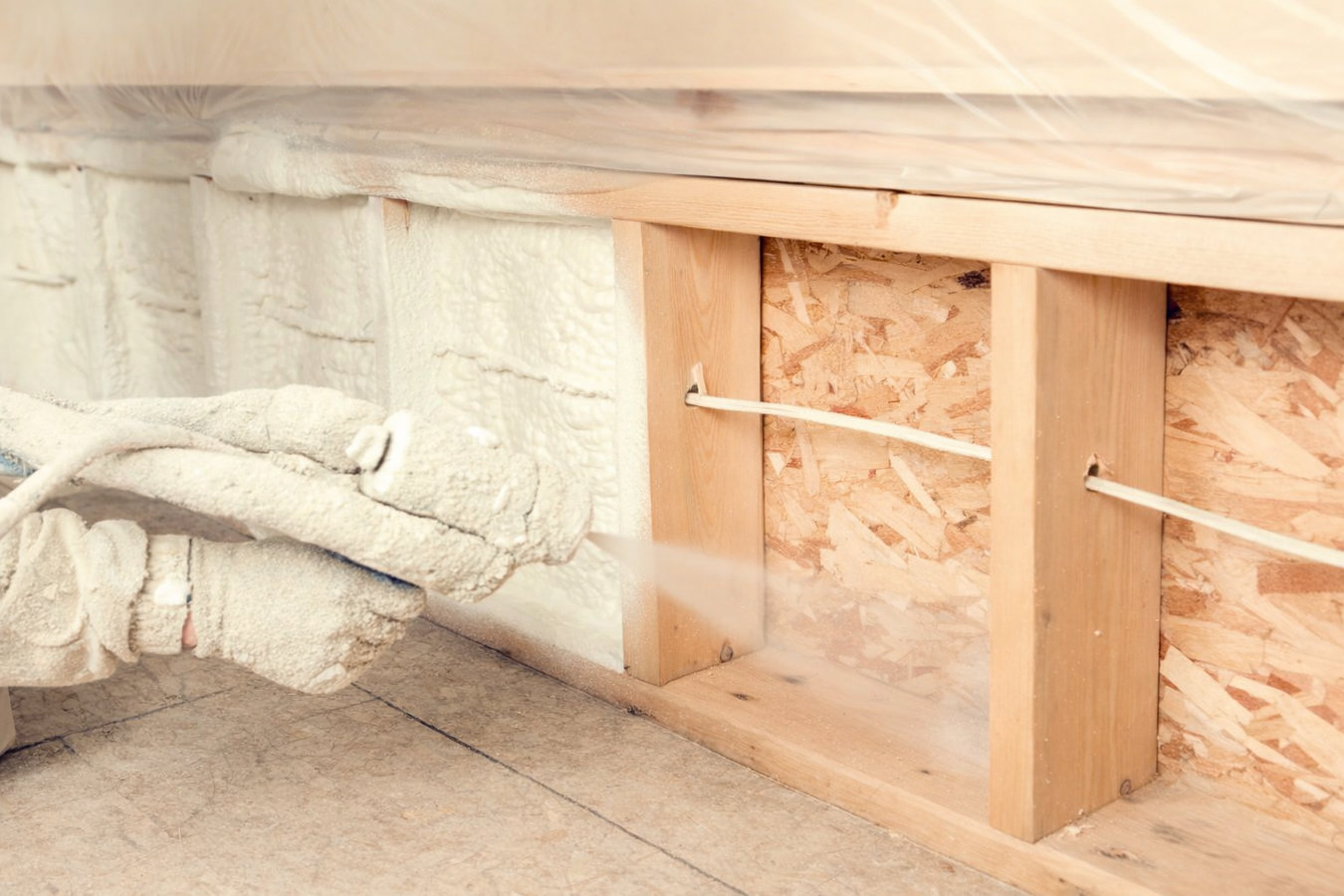
Fiberglass slows heat. Closed-cell foam stops both heat and air, which is why it outperforms other materials in Pueblo's windy, high-desert climate. We install it correctly at altitude, so it performs the way it should.
Closed-cell foam insulation in Pueblo, CO expands on contact with wall and ceiling surfaces, then hardens into a dense, rigid layer that blocks both heat transfer and air movement simultaneously - most residential jobs are completed in one to two days. Unlike fiberglass batts, which slow heat but let air pass through freely, closed-cell foam seals every gap it fills, which is why homes in Pueblo's windy corridor feel noticeably more even after installation, not just cheaper to heat.
Many Pueblo homeowners discover that adding more fiberglass did not fully solve their comfort problems, particularly in rooms that feel cold on windy days or in homes where the basement and attic have never been properly sealed. Fiberglass addresses conductive heat loss, but it does nothing for the air infiltration that Pueblo's southwest winds push through every unsealed gap in your building envelope. Closed-cell foam handles both in a single installation. For homeowners working with tight spaces like a 2x4 wall cavity or a shallow rim joist, it is also the most efficient option by volume because its insulating value per inch is roughly twice that of fiberglass. It is frequently the preferred choice when combined with our spray foam insulation service for comprehensive coverage.
Once cured, closed-cell foam does not settle, sag, or absorb moisture the way fiberglass can over decades. It is also moisture-resistant, which makes it the right choice for below-grade applications like basement rim joists and crawl space walls where moisture is a long-term concern.
If your energy bills seem high compared to similar-sized homes in Pueblo, poor insulation is often the cause. Pueblo's dual-season climate means your heating and cooling system is working hard in both directions. If your home is more than 30 years old and has never had an insulation evaluation, this gap is worth investigating.
Pueblo's persistent southwest winds are well known locally, and if you feel cold air moving near outlets, baseboards, or window frames on a gusty day, that is air infiltration that batt insulation cannot fix. Closed-cell foam creates a physical seal that air cannot penetrate, which is why it outperforms fiberglass in wind-exposed walls and rim joists.
Go into your attic on a July afternoon and notice how it feels. If it is overwhelmingly hot, that heat is working its way into your living space and forcing your air conditioner to run longer. Pueblo's high-altitude sun makes attic heat gain worse than in most other cities, and inadequate attic insulation is one of the most common findings in older Pueblo homes.
If you can see your attic floor joists clearly through the insulation, or if what is there looks matted and compressed, it is not doing its job. In Pueblo's older neighborhoods it is common to find only a few inches of original fiberglass that has flattened over decades. Visible gaps or pest disturbance are signs a professional evaluation is overdue.
Closed-cell foam is the highest-performance material we install, and it requires professional equipment, precise mixing ratios, and altitude-adjusted technique. Two chemical components are heated and sprayed together at your job site, where they react and expand within seconds. The foam conforms to every surface, fills every gap, and hardens into a rigid layer in about 24 hours. Getting it right requires consistent thickness across the entire surface, no thin spots at edges, no gaps at penetrations.
We install closed-cell foam in attics, basement rim joists, crawl space walls, exterior wall cavities, and any application where maximum R-value per inch and moisture resistance are both required. For Pueblo's older housing stock, the attic and rim joist combination delivers the biggest energy improvement in the shortest window. For below-grade applications, closed-cell foam's moisture resistance makes it a stronger choice than fiberglass in spaces that see any seasonal humidity. Where open-cell foam might suffice for interior sound control or attic coverage where moisture is not a concern, our open-cell foam insulation service offers a lower-cost option for those specific applications.
For homeowners who want a broader assessment of their home's insulation coverage before deciding on materials, our spray foam insulation page covers both closed-cell and open-cell options with guidance on which application calls for which product. We also prepare rebate documentation for Colorado Energy Office and utility programs during the job, so your paperwork is ready when the crew leaves.
Homeowners dealing with intense summer heat gain at Pueblo's high altitude who want maximum thermal resistance in the space most exposed to the sun.
Older Pueblo homes where the foundation-to-floor framing zone is uninsulated and letting cold air directly into the living space.
Homes with vented crawl spaces that see seasonal moisture and cold air intrusion from below the floor system.
Retrofit projects where wall cavities have little or no insulation and the homeowner needs maximum performance in minimal depth.
Pueblo's climate presents two separate insulation challenges that most materials address only partially. Summers regularly push past 95 degrees Fahrenheit and the city sits at nearly 4,700 feet, which means solar radiation is more intense than at lower elevations. Attics reach temperatures well above 140 degrees on summer afternoons, and that heat works downward into living spaces all day. Winters bring extended stretches below freezing with overnight lows occasionally reaching single digits. Standard fiberglass at code-minimum depth is often not adequate for a climate this demanding in both seasons, which is why closed-cell foam with its high R-value per inch makes sense for Pueblo homes. The National Weather Service Pueblo forecast office documents the temperature extremes that make proper insulation critical here.
Pueblo is also known for sustained winds out of the southwest, particularly through the Arkansas Valley corridor. Wind-driven air infiltration is one of the main ways homes in this area lose conditioned air, and it is a problem that batt insulation alone cannot solve because air simply passes through it. Closed-cell foam's ability to seal every gap it contacts makes it the most effective solution for wind-exposed walls, rim joists, and crawl space perimeters. Homeowners in the historic Eastside, Grove, and Bessemer neighborhoods, where pre-1940 construction is common, often see the biggest before-and-after difference because those homes were built without any meaningful air barrier. The Spray Polyurethane Foam Alliance publishes installation standards our crews follow on every job.
We install closed-cell foam across the full service region, including in Pueblo, Walsenburg, and Salida. Our crews are trained specifically for Pueblo's elevation, where foam expansion behavior differs from the lower-altitude calibration most manufacturer training assumes.
We ask about the area you want insulated, roughly when the home was built, and whether there is any old insulation to remove first. Replies go out within one business day. There is no commitment before we see your space.
An estimator walks the areas you want insulated, checks current conditions and accessibility, and determines the required foam thickness to meet your energy goals. You receive a written estimate before any work is scheduled.
Clear the work areas and arrange to be out of the house, including pets, for the full installation day and at least 24 hours afterward. The foam releases fumes during curing, and the re-entry window is not something to shorten.
The crew applies foam in passes to reach the required thickness, masks off anything nearby, and leaves surfaces clean. When the foam cures, we do a final walkthrough showing you the finished coverage and confirming there are no thin spots or gaps at edges before we leave.
Free estimate, no pressure. We tell you exactly what thickness is needed and why, so you know what you are paying for before the crew arrives.
(719) 750-0080At Pueblo's 4,700 feet, spray foam products expand and cure differently than at the lower elevations most manufacturer training assumes. Our crews are trained for this altitude, which prevents thin spots and off-ratio mixing problems that can compromise an installation.
Good closed-cell foam looks consistent across the entire surface. We apply in passes to build up to the required thickness and check edges, corners, and penetrations before leaving. You can see the finished work before the crew packs up.
We have been working on Pueblo homes for years and know what closed-cell foam needs at this elevation. You get a written estimate up front and documented work at the end, so you know exactly what was done and why.
When your project requires a permit, we handle it with the City of Pueblo Development Services, not you. A city inspection independently verifies the work was done correctly and adds documentation value if you sell the home. We have handled Pueblo permits before and know the current requirements.
Pueblo's elevation, wind patterns, and older housing stock each require specific knowledge that contractors based in Denver or along the northern Front Range do not automatically have. We work in this climate, with these homes, every week. The Colorado Energy Office offers weatherization programs for qualifying homeowners, and we can help you identify whether your project qualifies before the work begins.
A lower-cost foam option for interior attic and sound-control applications where moisture resistance is not the primary concern.
Learn moreA full overview of spray foam insulation options in Pueblo, covering both closed-cell and open-cell products and which applications each suits best.
Learn moreHeating season books our calendar fast. Call or request an estimate now and lock in your installation date before the cold snaps hit and spots fill up.