Loading...
Serving Pueblo, CO and surrounding areas. (719) 750-0080
Thousands of Pueblo homes were built with empty exterior walls. If yours is one of them, you are losing heat every winter. We fill those cavities without tearing out your drywall.
Wall insulation in Pueblo, CO fills the cavities inside your exterior walls to slow heat moving through them - most jobs on a finished single-family home are completed in one to two days with small patched holes as the only visible evidence. If your home was built before 1980, there is a reasonable chance those cavities are empty or nearly so, which means your furnace and air conditioner are working against open air gaps every single day.
Many Pueblo homeowners who call us for wall insulation have already had their air sealing services done or are ready to pair the two. Wall insulation handles the thermal barrier inside the cavity; air sealing closes the gaps around outlets, pipes, and framing members. Together they address the full path heat takes when leaving an older Pueblo home.
The work is less disruptive than most homeowners expect. For a standard blown-in job on finished walls, you can stay in the house while the crew works. No gutting rooms, no weeks of disruption.
If your gas or electric bill climbs sharply from October through February and you have not changed your habits, your walls may be letting heat out faster than your furnace replaces it. Pueblo winters are long enough that even moderate wall losses translate to real money every month.
If you feel a chill near exterior walls or around outlets when the wind picks up, outside air is getting through. Pueblo is one of the windiest spots on Colorado's Front Range, and rooms on the west or southwest side are especially prone to this when wall cavities are empty.
When one room on the same floor is noticeably colder or hotter than the room next to it and both share an exterior wall, insulation in those walls is likely uneven or missing. This is common in older Pueblo homes where insulation was added piecemeal over the years.
Pull the cover plate off an exterior-wall outlet and look inside. If you see an empty cavity, feel cold air, or notice daylight, that is direct evidence of an uninsulated wall. This quick check takes five minutes and gives you an honest picture of what is behind your drywall.
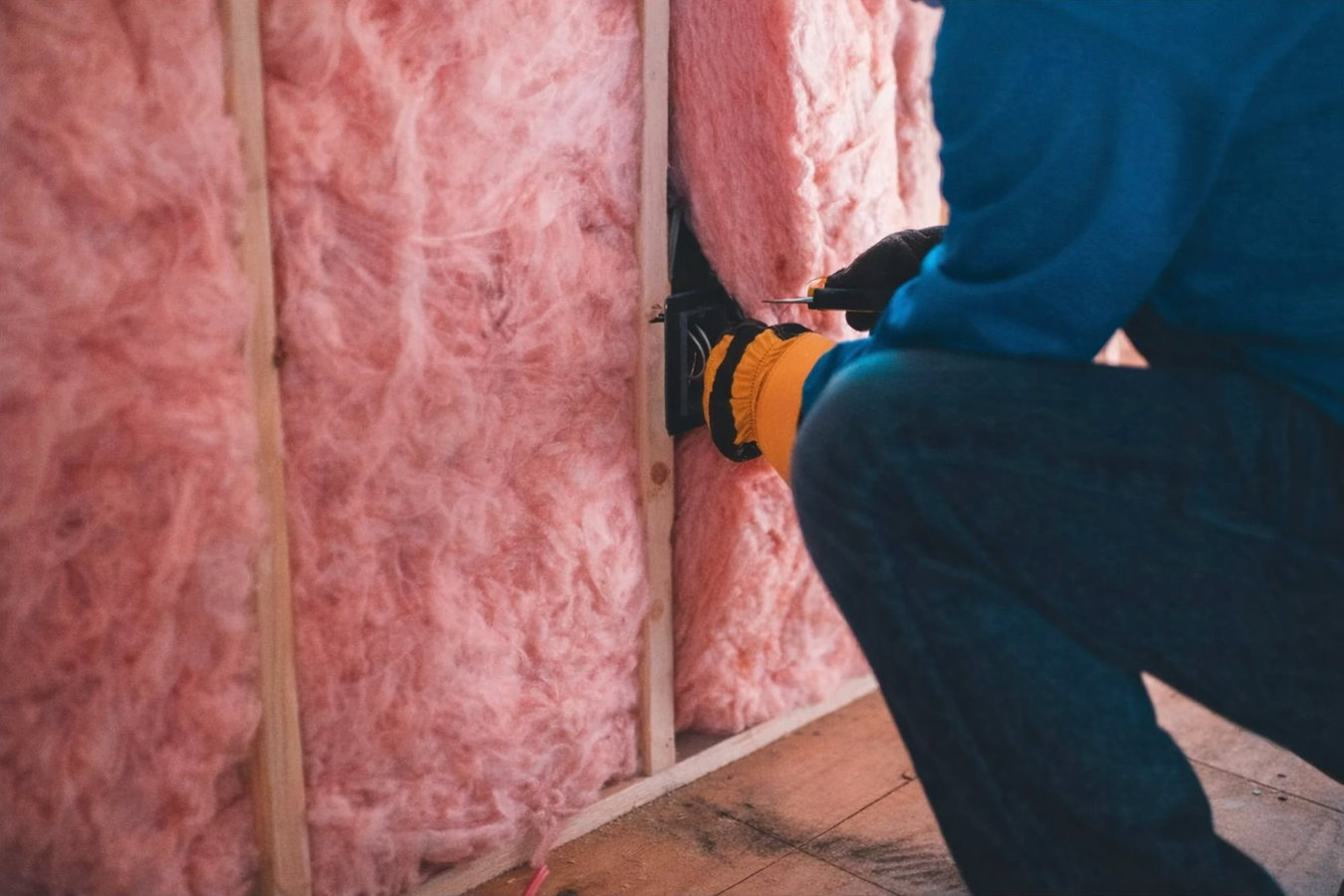
For most Pueblo homes with finished drywall, we use the dense-pack blown-in method. The crew drills small holes in the wall surface - from the exterior siding or from inside, depending on what your home allows - injects insulation material until each cavity is fully packed, then patches and paints the holes. The result is wall cavities filled from top to bottom with no voids. A thermal camera check after the job confirms there are no missed spots.
When walls are opened during a renovation, we use batt insulation cut to fit between studs. This is more cost-effective when the wall surface is already removed and allows us to reach every corner of the cavity without drilling. For homes where air movement through the wall assembly is the primary concern, we pair the batt work with spray foam insulation along the top and bottom plates to eliminate thermal bypasses that batts alone cannot address.
Some of Pueblo's older adobe and brick homes have solid walls without hollow cavities. For those, the standard blown-in method does not apply, and we assess alternative approaches such as interior insulation panels. If your home is in a historic neighborhood near the Riverwalk or the Union Avenue corridor, mention the wall construction when you call so we can come prepared.
Suits finished walls in existing homes; small holes are drilled, filled, and patched with minimal disruption.
Best for renovations where the drywall is already removed and full cavity access is available.
Paired with batts to seal top and bottom plates during open-wall work, stopping air movement batts cannot block.
Post-install camera check confirms every cavity is fully filled with no voids or cold spots remaining.
Pueblo sits at about 4,700 feet elevation, and the temperature swings here are more extreme than most Colorado cities. Summers regularly push past 95°F; winter nights drop well below freezing. That is a seasonal range of more than 100 degrees, and your walls are under thermal pressure at both ends. Homes built in the 1940s through 1970s - a large share of Pueblo's housing stock - were constructed when wall insulation was minimal or nonexistent by today's standards. They were not built for this kind of performance demand.
Pueblo is also consistently one of the windiest cities in Colorado. Sustained winds from the west and southwest push cold air through every gap in an under-insulated wall. If you live in the Bessemer neighborhood, the Eastside, or anywhere near the older residential corridors close to downtown, wind-driven infiltration is likely the biggest comfort problem in your home. Properly filled wall cavities, especially on the west and southwest sides of the house, eliminate most of that wind-driven heat loss.
We serve homeowners across the region, including Pueblo, Canon City, and Fountain. If your home was built before 1980 and the walls have never been addressed, the investment in wall insulation typically pays back in reduced heating and cooling costs over a few seasons.
We respond within 1 business day. A brief conversation covers your home's age, which rooms feel worst, and whether you have had any insulation work done before. No pressure, no commitment at this stage.
We walk the exterior walls, probe or camera-check what is inside them, and look for any moisture or structural issues that should be resolved first. This visit is free. You will know exactly what we found before any work is scheduled.
You receive an itemized written quote covering which walls we recommend treating, the material we will use, the total cost, and what patching is included. Compare it against other estimates, no problem.
Most single-family jobs finish in one to two days. After filling each cavity, we run a thermal camera pass to confirm coverage. The crew patches the drill holes before leaving, and a paint touch-up day follows if needed.
Free estimate, written quote, no obligation. We respond within 1 business day.
(719) 750-0080A large share of our wall insulation work is in homes built in the 1950s and 1960s - the most common era in Pueblo's older neighborhoods. We know what these homes typically have inside their walls and how to work around brick veneer, unusual stud spacing, and decades of patch-over-patch construction.
After filling each wall cavity, we run an infrared camera check before patching the holes. If any areas were missed or underfilled, we catch them on the same visit rather than leaving them for you to discover next winter.
You receive a line-by-line written estimate before any work starts. The quote specifies each wall, the material, and the exact price. The final invoice will match it. If scope changes during the job, we call you before proceeding, not after.
Pueblo homeowners can typically expect their entire exterior wall package completed within a day or two, depending on home size. We schedule efficiently and do not leave jobs partially done between visits, which means less disruption to your routine.
Pueblo's housing stock is unusual - it mixes 1920s brick bungalows, 1950s concrete-block ranches, and 1970s wood-frame homes, often on the same block. That variety means a contractor who only works on newer subdivisions is not prepared for what they will find in your walls. Building Performance Institute standards guide how we assess and fill each cavity, giving you a benchmark for the quality of work beyond our word alone.
Closes the gaps around outlets, pipes, and framing that insulation alone cannot block, completing the thermal envelope.
Learn moreSeals and insulates simultaneously with an expanding material that conforms to irregular gaps in Pueblo's older wall framing.
Learn morePueblo winters don't wait, and neither does heat loss through empty walls. Call or submit a request now to lock in your installation date before the schedule fills up.